Kids’ Fitness Programs: What to Look For
A good kids’ fitness program is nothing like adult training. The focus shifts from performance metrics to building movement confidence, establishing healthy habits early, and making exercise feel like play rather than work. Local gyms and community centers increasingly offer structured programs for children—classes, team sports, strength fundamentals—and the quality varies widely. The difference between a program that hooks a kid on fitness for life and one that makes them dread the gym often comes down to instruction, age-appropriateness, and whether the facility takes safety seriously.
What Matters in a Kids’ Program
The best programs have instructors trained specifically in youth fitness—not just trainers who happen to teach kids. Look for credentials from organizations that specialize in young athletes: pediatric fitness certifications, youth sports coaching licenses, or background in physical education. The instructor should emphasize proper movement patterns over intensity. They should also scale exercises to different skill levels, because kids in the same age group can have vastly different coordination and strength. Watch a sample class if possible: are all kids doing the same exercise in the same way, or do you see modifications offered? Do kids look engaged and having fun, or are they just following commands?
Worth knowing
Age-appropriate activity and strength-training safety for kids are covered in detail by HealthyChildren.org, the American Academy of Pediatrics’ guidance site for parents.
Program Types and What They Develop
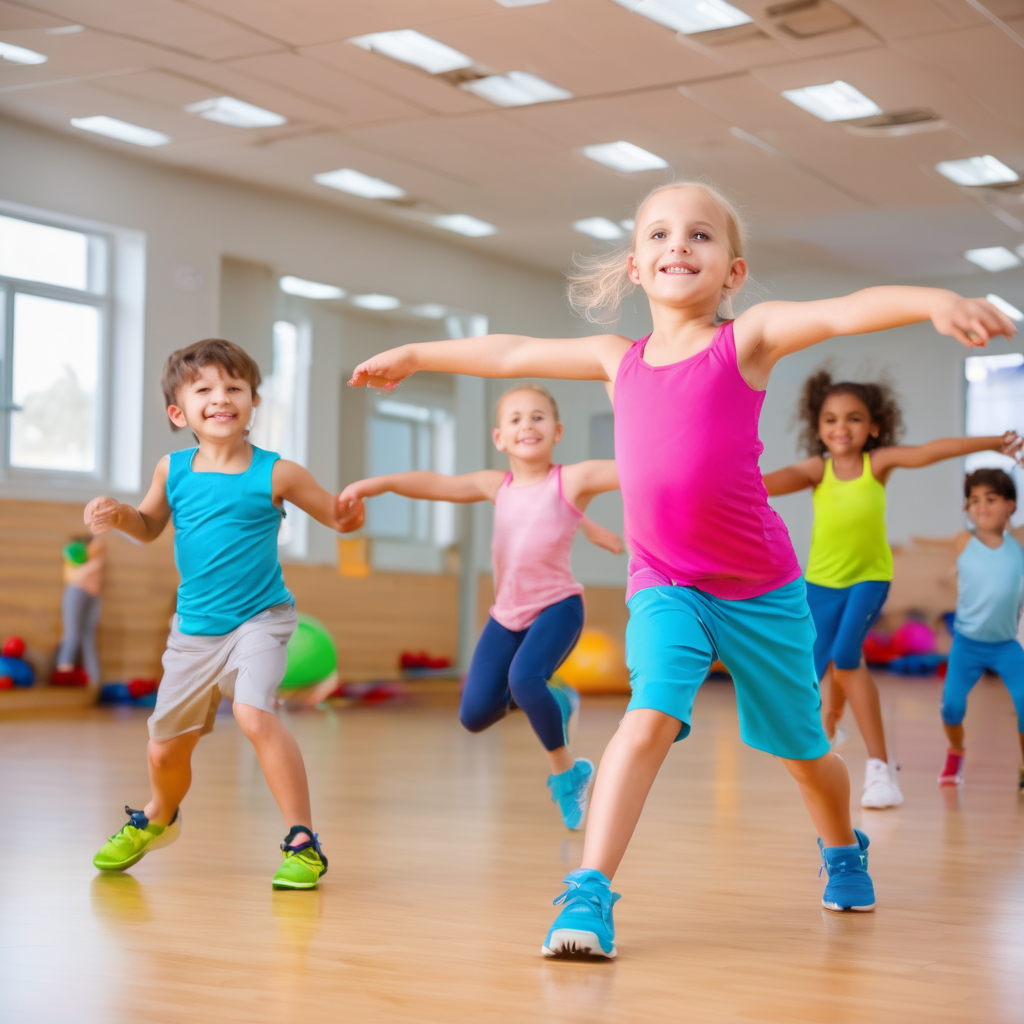
Group Classes (Aerobics, Dance, Movement)
Builds cardiovascular fitness, coordination, and rhythm. Best for kids who enjoy music and don’t mind working in groups. Low injury risk if instruction emphasizes form over speed. Social and fun.
Strength Fundamentals
Teaches proper bodyweight movement and introduces light equipment. Requires good instruction—poor form habits taught young are hard to break. Best for kids 8 and up with an instructor certified in youth training.
Sport-Specific Training
Focuses on skills for soccer, basketball, tennis, etc. Higher intensity and competition. Good if your child is already interested in a sport; can feel exclusionary to less coordinated kids. Instructor should understand development stages.
Yoga and Flexibility
Builds body awareness, balance, and calm. Accessible to kids of all ability levels. Good introductory program for anxious or less coordinated children. Very low injury risk with proper instruction.
Questions to Ask Before Enrolling
What’s your instructor’s background with kids?
Ask for credentials and experience. Pediatric fitness certification, physical education background, or youth coaching license are good indicators. Ask how many years they’ve taught kids and what age groups they’re most comfortable with. A trainer who’s only worked with adults shouldn’t be your child’s first fitness instructor.
Kids develop at different rates. A good program offers modifications: easier versions for less coordinated kids, more challenge for advanced ones. If the instructor says everyone does exactly the same exercise the same way, that’s a yellow flag. Some kids will get bored, others will fail and feel frustrated.
Ask about injury prevention, spotting, and equipment rules. For strength programs, ask at what age kids start using weights and whether there’s a teaching progression (bodyweight first, then light dumbbells). Ask about adult-to-child ratio and whether parents can observe. Any reluctance to answer these questions is suspicious.
Most gyms allow a trial visit. Use it to watch how the instructor cues movement, corrects form, and interacts with kids who struggle. Watch how kids react—are they engaged or distracted? Nervous or confident? Your child’s reaction to the first class matters more than anything the gym tells you in marketing.
What Success Looks Like
A good kids’ program doesn’t have to show dramatic results right away. Success is your child asking when the next class is, or mentioning something they learned, or trying a move at home. It’s an instructor who notices your child’s progress and adjusts the difficulty. It’s an environment where kids feel safe being beginners. The goal isn’t to build young athletes—it’s to build kids who think of movement as normal, fun, and something their body can do.